
Creating A Hero
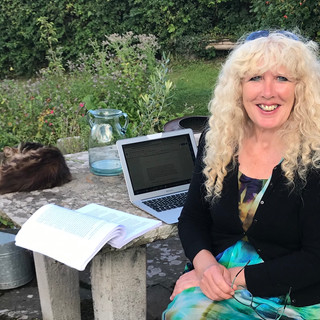

It’s been a hectic time working on my various writing projects, especially my new suite of creative writing videos that I want to launch soon. They will appear first on my Patreon page, where I’m aiming to build an online writing community, and then on my YouTube channel, Write The Way Up. After months of scripting the creative writing process, filming and editing, things are really coming together, and I can’t wait to share them!
With my novels, I try to write or edit nearly every day, even if it’s only for half an hour, which does help to keep them moving forwards, but it’s not always possible as life frequently intrudes. But it’s the part of writing no-one ever really tells you about - the graft, the amount of time it takes and the persistence you need to have in order to not let anything fall by the wayside.
So, take heart if you’re writing and feel like you’re not getting far enough fast enough. It happens to us all. Whenever I feel frustrated because of how long the process is taking, I like to think about the writer I heard about years ago with three children whose only free time was ten minutes waiting at the school gates. She saw those ten minutes as a precious gift and used them every day to write her novel. It took her several years, but she didn’t give up because it was the only time she had available around working and raising a family. I tip my hat to her often when I’m flagging, and her determination helps keep me going too.
So, remember that if it is taking a long time, you’re not alone and to keep persevering. After all, a writer writes, and the rewards in writing those two magical words (The End), totally makes it all worthwhile.
Anyway, to the subject at hand – creating a hero. But what does it mean to create a hero rather than create a protagonist or central character?
Whatever your genre, whatever your story idea, readers need characters they care about; someone they can root for irrespective of any idiosyncrasies, foibles or flaws. A protagonist is the character around which your plot revolves. The choices they make and the actions they take drives the story forward. They often transform or change in some way or experience an enlightening moment that shifts their perspective.
Readers can also invest in protagonists who are villains, like Tom Ripley – a skilled liar, con man and murderer. You may not care about Tom as a person or like him. After all, he is a villain, but the twists and turns, the escalating stakes and his responses to pressure as the walls close in make the reader want to know what happens to him. Will he finally be caught and face accountability for his crimes or does he manage to slip away?
A hero is slightly different to a protagonist because they’re a person admired for their courage, as well as their skills or achievements, and traditionally they usually end up ‘saving the day.’ They can vary vastly according to hero type and genre, as well as how a writer uses the narrative to tell their story. A hero can also be an influencing character rather than the main protagonist, such as Professor Van Helsing in Dracula or Captain Hastings in the Hercule Poirot detective stories.
So, if you want to create a hero for your story, here’s some recognisable hero archetypes for you to consider.
The Perfect Hero
Let’s start with the perfect hero who embodies everything good about humanity. These heroes are strong, uncompromising and decisive, as well as often kind or caring. They aren’t completely without weaknesses because, let’s face it, nobody is perfect, which makes them deeply human and relatable. Think of Jane Eyre, an orphan and governess who endures severe hardships throughout her life but who refuses to compromise her independence or her morals, despite many challenges and the expectations of the times. For a small, pale and plain young woman, she is remarkably strong and resilient.
The Misfit Hero
Then there’s the misfit hero, who exists on the fringes of society, sometimes questioning authority. They can sometimes be a loner or someone who is made to feel different but who chooses to remain just as they are. Their greatest deeds can also go unrecognised, unrewarded or even punished. Think of the dwarf Tyrrion Lannister in The Song of Ice and Fire. He’s not a noble, strapping warrior or a saviour of the people. He’s an outcast who uses his wit and intellect rather than his physical strength to survive or excel. Cynical and sarcastic, he’s also an idealist and genuinely tries to govern fairly and protect the vulnerable. But when backed into a corner, he can also be cruel, manipulative and vindictive, just like the other members of his family.
The Everyman Hero
The everyman hero is just as the name suggests – an ordinary man with no special skills or abilities who is both recognisable and relatable for being just like anyone else. These heroes are community spirited and fair minded leaders who fight for the ‘little people.’ Often, they just happen to be in the wrong place at the wrong time, but they rally and face a challenge or a foe with courage. Like Dr John Watson, the companion of Sherlock Holmes. Competent, steadfast and calm under pressure, he’s not a sidekick but a hero in his right. As a former army medic, he’s recognisable as an everyday man who acts heroically when the need arises.
The Anti-Hero
There’s also the anti-hero who, under every circumstance, doesn’t want to be a hero but is forced into the role because there’s no-one else around and their will is too powerful to resist the call. They attempt to reach their goals using un-heroic methods. So, they have good intentions, but they go about achieving them by unconventional or questionable means. Like Scarlet O Hara in Gone With The Wind – a ruthless, self-centred, manipulative and strong woman who will do anything to survive the American civil war and, ultimately, get what she wants.
The Reluctant Hero
We also have the reluctant hero who doesn’t want the responsibility of the quest but is forced into it by circumstances. The most obvious example for me is Frodo Baggins from Lord of The Rings - an unassuming hobbit with no desire for power or fame, who steps up to the enormous challenge of transporting the one ring to Mount Doom to defeat the evil of Sauron. The costs of his quest are high, but he perseveres and endures the suffering to protect Middle Earth and his beloved Shire from eternal darkness.
The Prodigy Hero
The prodigy or young hero has the opportunity to shine through testing circumstances, but who also faces incredible obstacles and takes extreme risks. For obvious reasons, the story archetype that often uses this type of hero is Rites of Passage. Like Christopher in Mark Haddon’s The Curious Incident of the Dog in the Night-Time - a mathematical genius on the autism spectrum who uses his incredible skills to investigate the mysterious killing of a neighbour’s dog. He manages to navigate severe sensory, social, and emotional challenges to escape danger.
The Redemptive Hero
The redemptive hero usually refuses the call to adventure or refuses to do the right thing because they want to avoid getting involved. Sometimes they operate as the perfect hero in secret. Other times, they’re genuinely too embittered or cynical to get involved but stand up at the very last minute to take action. Such as Jean Valjean in Les Miserables, a brutalised convict jailed for stealing a loaf of bread, who escapes prison and completely transforms his life following an act of grace and kindness. He then repeatedly risks his freedom to save others, even his nemesis and relentless pursuer, Inspector Javert.
The Tragic Hero
The tragic hero is often found in stories of realism where the hero fights for survival, but because the story reflects reality, a happy ending is never guaranteed. The tragic hero is often featured in romances like Dr Zhivago or Anna Karenina where a ruinous downfall or death is preceded by an error in judgement or single character flaw.
The Genius Hero
The genius or geek hero has all the qualities of the perfect hero without the physical or sexual power and, therefore, has to use their intelligence. Often extremely brave, they must tackle physical challenges without the means to do so and are, therefore, taking much greater risks. Like Lisbeth Salander in The Girl with the Dragon Tattoo, by Stieg Larsson. A tattooed, antisocial punk prodigy and self-taught computer hacker, who uses her analytical brilliance to destroy criminals and violent abusers.
The Adventurer Hero
The adventurer hero enjoys a challenge because they’re motivated by risk, excitement and infamy. Like D’Artagnan in The Three Musketeers. A bold, hot-headed young swashbuckler, he joins forces with the infamous trio of royal swordsmen for thrilling high-stakes political intrigue, duals, skulduggery, romance and dangerous escapades.
The Founder/Builder/Creator Hero
There’s also the founder or builder or creator hero, which is often used in political stories where the hero sees a need and sets about providing it for the good of the people. They’re also a vulnerable hero because they can be dishonoured, corrupted, imprisoned or assassinated. Creator heroes are often at the heart of biographical and non-fiction books because they overcome adversity for the sake of others and then go on to change the world. For an example in fiction, think of Tom Builder in Ken Follett’s Pillars of The Earth – a master mason whose lifelong dream is to design and build a magnificent Gothic cathedral for future generations. His commitment to perfect craftsmanship, his vision and patience drive him onwards to endure war, starvation and political corruption to ensure the dream for others is realised.
The Subverted Hero
Finally, there are subverted heroes because like anything else, the definitions of the hero and the rules of narrative structure can be subverted. For an example of a subverted hero, consider Thomas Cromwell in Hilary Mantel’s Wolf Hall. Traditionally, Cromwell as an historical figure has been regarded as a ruthless bureaucrat and cold hearted villain. But Mantel flips this characterisation on its head by presenting the reader with the son of a brutal and bullying blacksmith who manages to escape his humble beginnings and rise through the ranks to become a trusted advisor to Henry VIII. His success is due to a combination of charm, hyper-competence, pragmatism and calculation. His perspective as a beaten and defenceless young boy and the sudden death of his wife and daughters positions him as a man who has suffered personal tragedy and feels things deeply. Emotions resonate with him, and we are no longer interpreting him as a pure villain.
All of these hero archetypes have been played around with, re-imagined, fused or subverted over the years to create new and exciting stories, so remember that everything I’ve shared is just a basic guideline regarding what you can work with. Once you’ve decided who you want your hero to be, you then need to work out their journey, but I’ll save that exploration for another time and another post…
If any of the books I’ve mentioned here intrigue you, then maybe buy them from a local bookshop and support local independent sellers? Every little helps these vital resources thrive against the monopoly of the big giants.
Thanks, as always, for reading and happy writing!



Comments