
Building Your Fictional World
Exciting and busy writing times but I'm taking a breather from edits and making videos to talk about worldbuilding for anyone who might be unsure what to focus on with their story. So, here's some thoughts that might help.
Worldbuilding is where genre, setting and plot combine to create a believable environment that allows your characters to exist and interact. While your setting impacts the plot of your story, it’s how your characters interact with your world that makes it feel like a real place.
The golden rule of all worldbuilding – regardless of genre - is providing clearly established rules, limitations and possibilities that are relevant to your characters and plot. Consistency in these boundaries is essential to help suspend disbelief so that your reader can fully invest in your story, rather than questioning something that suddenly appears to contradict everything which has gone before.
That isn’t to say you need tons of dense descriptions explaining every detail, which would be too overwhelming and boring for the reader. The key is selecting telling details which insinuate, rather than overloading your reader with too much information.
As Robert McKee says in his excellent book on writing, Story:
Rather than hopscotching through time, space and people, discipline yourself to a reasonably contained cast and world where you concentrate on creating a rich complexity.
But where to begin? Building your world is more than just creating a mere backdrop. It’s where significant realistic details can have a dramatic impact on both your plot and your characters.
Everyone has a different approach and there is no right or wrong way. It’s what works best for you. I tend to have a story concept first – sometimes just one line – as well as my main characters and a rough plot idea before anything else. Then I build the world where my characters will exist while I write. When I’m working on possible scenes that I use to map out my plot, I like to visualise the world of my story by allowing my mind to wander freely through my imagined landscape. The shapes, colours and textures become more focused as I step into each scene and visualise what aspects will convey the right atmosphere and conditions for my characters.
Research (hello old friend!) can also inform your process with details rooted in our reality that can enrich your imagined world. For my novel The Bookfinder, I researched the Vatican archives, the history of cryptography, paint processes through the ages and the murky world of appropriation. I spoke to experts in their field (check out my blog post on the Joy of Research for the details) and it was invaluable for helping me focus on what to include to create what beta readers have called a rich and believable world.
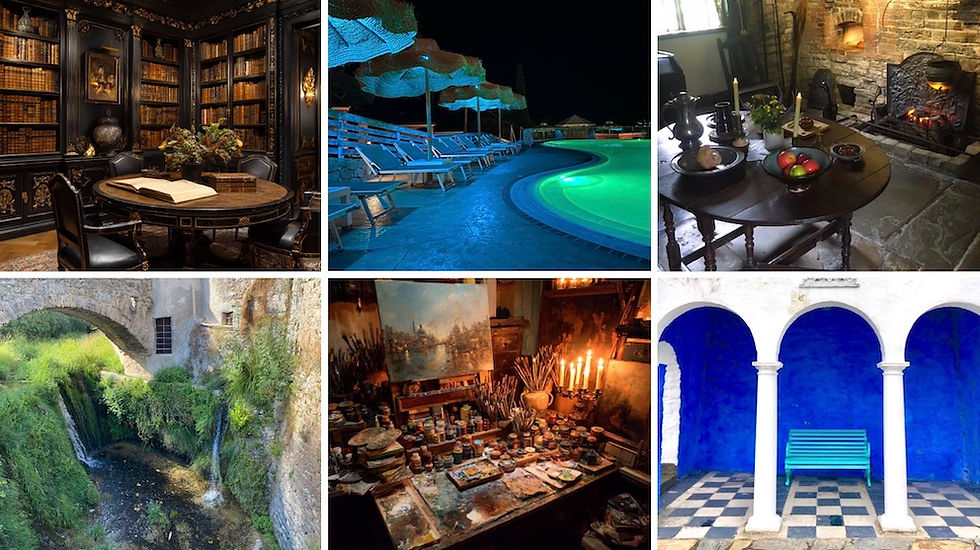
I also find visuals incredibly inspiring and love hunting for images that capture elements of what I want for my story so that I can create the right definitions. For instance, I pored over photographs and books featuring libraries which have been created all over the world throughout history, and discovered many stunning spaces dedicated to preserving knowledge. My imagination was fired up by such beautiful interiors stacked with histories, stories and secrets from the past.
Again, every writer is different, and it’s not essential to have your whole world mapped out in detail before you begin actually writing your narrative. For example, George R.R Martin wrote a single scene which became the opening chapter for Game of Thrones and took it from there. He fleshed out the details according to the demands of his story as he wrote, which allowed the world he was creating to evolve organically. As he progressed through the story, he added maps, genealogies and histories in an approach he calls ‘gardening’ rather than ‘architecture.’
Margaret Atwood sometimes builds her worlds from the ground up by asking practical questions about day to day life to reveal a society’s values and structures. For example, what people eat and how they pay for it, prepare it and consume it.
By contrast, Tolkien’s approach to worldbuilding began with decades of mapping out what he called his ‘secondary world’ - a massive body of work about the histories, languages, customs and cultures of the many different people who inhabited his Middle Earth over time. This world underpinned his narrative for The Hobbit, The Lord of The Rings, The Silmarillion, The Book of Lost Tales and The Unfinished Tales of Numenor & Middle Earth. Pertinent details from this secondary world were worked into his narratives to propel the story forward and offered a depth and complexity that was unlike any other.
If you’re interested in how other writers tackle worldbuilding, you’ll find there’s plenty of authors who generously share their thoughts in interviews or posts, and it’s worth checking them out to inform your own creative writing practice. You’ll discover a variety of processes but also some common approaches.
For instance, you might want to think of your world like a character that can both help and hinder the protagonist in your story. As a character, your world can effectively support your narrative with a potential for conflict, danger and opportunity, while also mirroring emotional and psychological states, especially through atmosphere. Atmosphere is really important to offer an immersive reader experience, and this is where the sensory details of your world, like sound, smell and taste, can bring it vividly to life with more impact and resonance than just a visual description.
Compelling lore can also add layers of depth to help create a convincing three-dimensional place, but again, don’t overdo the descriptions or be too rigid so that you lose any sense of mystery. Every world has its own history, infrastructure, culture and philosophies that interconnect and affect aspects of a character’s life. But there’s also unknowns and the potential for discoveries to be made, just like our own world. The trick is to ensure a degree of flexibility to avoid boxing yourself in, such as a rare exception that allows for the unexpected without crashing against the logic you’ve established.
It's also wise to not begin your story with a ton of lore, especially for genres like fantasy or speculative fiction. You need a character or characters that the reader cares about first. So, weave the details of your world into the narrative and make them matter to your characters. Being overwhelmed by information too early means the reader might have to keep going back to remind themselves of names, places or other key stuff that they find hard to keep track of, which throws them out of the story instead of engaging with it. Exposing more details about your world at a steady pace as your characters interact more with it helps avoid confusion and reader frustration.
Whichever method you use, and whatever works for you, worldbuilding can be an exciting process because you’re bringing to life whole environments that might only exist in your imagination. With specific details woven into your story you can turn your vision into a living, breathing and believable space for your characters to be challenged, as well as rewarded, while they progress through your story.
If you want to know more about worldbuilding, you might be interested in a video I’m working on for my YouTube channel and Patreon, featuring tips, advice and creative writing exercises. I’ve got a few others lined up that focus on Genre and the Power of Setting, which I’ll be launching soon. So, keep an eye out for any updates regarding when these will become available.
As a final note, remember that above all else, a writer writes, even if it’s just a few lines every day. It’s how all stories are created – one sentence at a time and one paragraph at a time. So, keep going with whatever you’re working on and happy writing!


Comments